
Bank magnetic stripe cards pose security risks: Why has the promotion of financial IC cards been sluggish?
2013-12-17 · Recently, there have been multiple cases in Beijing where ICBC and Bank of China payroll cards were stolen in other locations. Guangming Online has also conducted interviews and reports on these matters ("ICBC claims no responsibility for payroll card theft," "Cash in payroll card disappeared, Bank of China claims 'only half compensation'"), which has attracted widespread attention from many netizens. Reporters later investigated and found that most of these stolen bank cards were magnetic stripe cards, which have the drawback of making information easily copied by criminals. Experts say that accelerating the "chip-based migration" of bank cards is urgent.
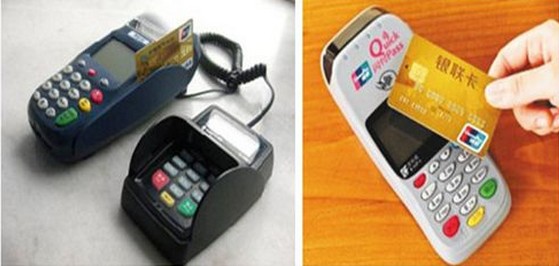
By 2015, all domestic banks will replace magnetic stripe cards with financial IC cards
Users should replace their financial IC cards as soon as possible
"When a depositor's bank card is stolen by criminals, there are basically three situations: first, the depositor accidentally leaks the card information; Second, banks failed to fulfill their obligations to review and verify depositor information and information; Third, criminals use technical means to steal depositor information and create fake cards. A bank official told Guangming Online.
In recent years, due to technical flaws in magnetic stripe card information being easily copied, incidents such as the use of magnetic stripe information theft devices to copy bank cards have frequently surfaced. The widely used magnetic stripe card systems in banking systems have clearly become seriously outdated, and their inherent "defects" objectively provide opportunities for criminals.
In fact, the International Bank Card Organization has long been aware of this issue. As early as February 1999, Europay, MasterCard, and VISA jointly formulated the Bank IC Card Technical Standard (EMV Standard), aiming to promote "EMV migration" in various countries, that is, replacing bank cards with magnetic stripe cards for financial IC cards. Currently, more than 14 countries and regions in the Asia-Pacific region have launched IC card migration programs. After implementing the migration, the bank card fraud rate has dropped by more than 90%.
According to a relevant official from the central bank, improving the security and usage efficiency of bank cards is one of the main goals for China to promote the chip-based migration of bank cards. This allows cardholders to use only one financial IC card to function multiple magnetic stripe bank cards, avoiding the previous situation where magnetic stripe bank cards issued large numbers but were mostly dormant cards and had low usage frequency.
In response to the recent multiple cases of bank cards being stolen or used in other locations, industry insiders remind depositors to promptly replace their existing magnetic stripe cards with financial IC cards and enhance security levels.
GoldWhy is the promotion of integrated IC cards so slow?
According to the central bank, China has issued over 3.83 billion bank cards in total. As of the end of June 2013, 275 million financial IC cards had been issued, an increase of 149 million compared to the end of 2012. There are 100 commercial banks that have issued financial IC cards, accounting for 7.2% of the total issuance of bank cards.
It is reported that Agricultural Bank of China currently has the largest number of financial IC card issuances, exceeding 68 million cards. Next are Industrial and Commercial Bank of China with 64 million bonds, China Construction Bank with 61 million, and Bank of China with 34 million. Among them, the four major banks—ICBC, ABC, BOC, and CCB—accounted for 83.2% of the total financial IC card issuance.
In May this year, China UnionPay officially became a member of the international chip card standardization organization EMVCo. According to data released by UnionPay, UnionPay International has issued 7 million financial IC cards in overseas markets such as South Korea, Hong Kong, and Macau.
According to the central bank's requirements, by 2015, all domestic banks will replace magnetic stripe cards with financial IC cards. However, the promotion of financial IC cards has not been ideal. From the consumer side, financial IC cards generally face issues such as inconvenient storage in storage, insufficient merchant awareness, some merchants accepting financial IC cards by swiping magnetic stripes, and insufficient training and publicity, all of which affect the further development of financial IC cards.
On the other hand, banks are not very enthusiastic about promoting financial IC cards. "The main reason is the high cost of financial IC cards." A bank representative said that the production cost of a magnetic stripe card is less than 1 yuan, with a processing fee of 10 yuan, while financial IC cards cost about 20-30 yuan, which is also higher than magnetic stripe cards. Moreover, once a bank card is upgraded, a large number of ATMs, POS terminals, and other acceptance terminals will also require corresponding technical upgrades, which will be costly. Currently, some banks are not yet able to offer card replacement and number protection services, and many customers' bank cards also have wealth management and other functions, which undoubtedly adds inconvenience for cardholders when switching to financial IC cards.
"Composite cards" have become transitional products for financial IC cards
Currently, there are many types and large quantities of bank card acceptance terminals on the market. Renovations for POS machines, ATMs, cashless payment terminals, and telephone payment terminals need to be completed gradually. According to central bank data, as of the end of the second quarter of 2013, the total number of POS and ATM units was 8.112 million and 493,000 respectively, with renovation rates reaching 98.7% and 97.4%. Of the approximately 8 million POS terminals that have been retrofitted, 2.05 million POS machines support both contactless and contactless financial IC card transactions.
According to interviews with the central bank, since the acceptance environment for financial IC cards is not yet perfect, the vast majority of currently issued financial IC cards are composite cards that combine both chip and magnetic stripe. This composite card can be traded via the chip on terminals that have undergone chip upgrades, or via magnetic stripes on terminals that have not been upgraded. The latter is called downgrade transactions. At this time, the chip card's functions are not fully enabled; however, the card swipe information is recorded in the chip, and its anti-theft function is no different from that of magnetic stripe cards.
Currently, only a few commercial banks have issued a small number of pure chip financial IC cards, which can only be used on devices and channels that support PBOC 2.0 chip cards.
A relevant official from the central bank told reporters that, in response to these circumstances, the People's Bank of China issued a document earlier this year outlining the 2013 financial IC card work, further advancing financial IC card development from the perspectives of improving the acceptance environment, promoting card issuance, expanding industry applications, and cultivating a soft environment for financial IC cards. Currently, branches of the People's Bank of China, commercial banks, and China UnionPay are organizing implementation according to their own circumstances; Banking financial institutions in Ningbo and Fujian have spontaneously carried out risk transfer work, guiding acquiring institutions to correctly accept financial IC cards and minimizing downgrade transactions.
Get a quote plan
Just state your usage scenario and we can provide you with a quote! Thank you for your cooperation!