
What is an RFID electronic tag? Detailed introduction to Sontai electronic tag applications
2014-04-21 · This article is aimed at all customers unfamiliar with RFID electronic tag applications, providing a detailed introduction to the attributes, benefits, and other aspects of RFID electronic tags
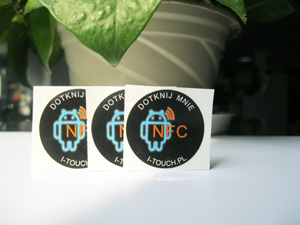
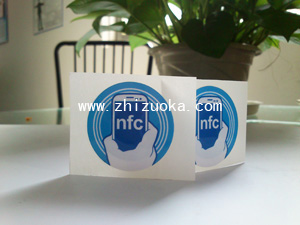
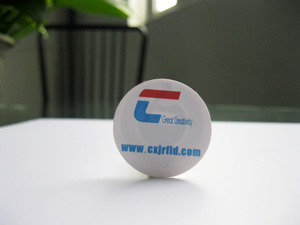
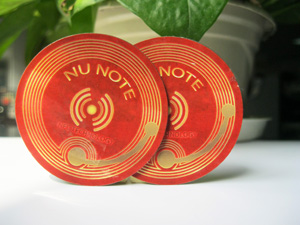
Brief introduction to RFID electronic tags
RFID electronic tagsIn fact, it is a product derived from contactless technology. Previously, contactless technology was packaged in the form of cards, which may not be suitable for all industries. RFID electronic tags can replace the previous smart cards, because RFID electronic tags have good flexibility, can bend ninety degrees, and are still usable. Therefore, in terms of product extension, they are much more flexible than smart cards.
Composition and application of RFID electronic tags
RFID electronic tags consist of an antenna and a tag. After making the antenna, we use a multifunction machine to bond the antenna and tag together, then add a layer of 3M glue to attach it to the object and use it. Its range of applications is quite broad. The main application areas of RFID electronic tags include: anti-counterfeiting and anti-theft, asset management, logistics tracking (currently not mature), manufacturing and assembly, airline baggage handling, mail/express package handling, document tracking/library management, animal identification tags, Sports timing, access control/electronic tickets, automatic road toll collection, all-in-one cards, plastic pallets in storage, and revolving baskets, among others.
Therefore, electronic tags have very wide applications.
Key point: How exactly do RFID electronic tags work?
Many clients ask me what functions they want to implement with certain tags. For a simple example, a client needs to make electronic tags and wants to manage membership information in their store. They want to ask how much it costs to make 1,000 labels. I ask if they have a system, and they say no. I ask if they have a reader or writer, but they say no. They say no, and ask if we can provide them together. Of course, it can be provided. Here, I mainly want to explain how electronic tags should actually be used.
To use RFID electronic tags, three things are required: first, a management system; second, a reader/writer; and finally, the electronic tag. For example: after having three things, for example, if I want to implement asset management, I first attach electronic tags to the objects to be managed, then input the tags into the system via a reader/writer, and finally view the detailed information of the tags through the system. Simply put, an electronic tag has a number. After the card reader enters the number into the system, the system records it. Later, when asset management is needed, everything is checked within the system. The initial step is to stick the tag onto the object, then use the reader to read the tags and enter them into the system. This completes the asset management operation. Other application methods follow this pattern.
RFID electronic tagsAttributes
Common sizes: 50*50, 35*35, 18*18 (minimum production sizes available by our factory); other sizes can be customized
Supported chip protocols: ISO14443A, ISO15693, 180006C/B. There are many different chip models under these protocols, which will not be introduced here.
Storage space: 1K/2K/4K/8K available, depending on customer needs.
Read/write distance: 3CM-6M (depending on antenna design and reader/writer power)
Erasable times: 100,000 times
Read/write time: 1MS
Materials: PVC/PET/ABS/adhesive/paper
Thickness: 0.2~1.2 mm
Storage temperature: -25°C to 50°C
Humidity: 20% to 90% RH
Operating temperature: -40°C to 65°C
Benefits of RFID electronic tags:
1. Long read/write distance with stable performance
2. Fast read/write speeds and sensitive signal response;
3. Label sizes of any specification can be designed to meet different user needs;
4. Label materials are diverse and soft, allowing for arbitrary packaging;
Introduction to RFID electronic tag manufacturers
Our factory owns a label antenna manufacturing company, producing labels from Bangding chips to lamination and grinding in our own factory. We have three modern, high-standard production lines: PVC card production line, equipped with brand-new CTP machines, Heidelberg printing machines, and 12 synthesizers, with a monthly output of 40 million PCS of cards. Etching antenna production line: equipped with multiple roll-to-roll printing machines, laminating machines, and etching machines, with a monthly production capacity of 30 million PCS. RFID terminal product production line: equipped with multiple resealing bag machines, composite die-cutting machines, and 8 synthesis machines, with a monthly production capacity of 8 million smart cards and 6 million electronic tags.
Get a quote plan
Just state your usage scenario and we can provide you with a quote! Thank you for your cooperation!