
Thermally Conductive Double-Sided Tape
Thermally conductive ceramic-filled polymer with silicone pressure-sensitive adhesive. Reference conductivity 1.5 W/m·K, thickness 0.15-0.50 mm, continuous temperature about 120°C and short-term about 180°C.
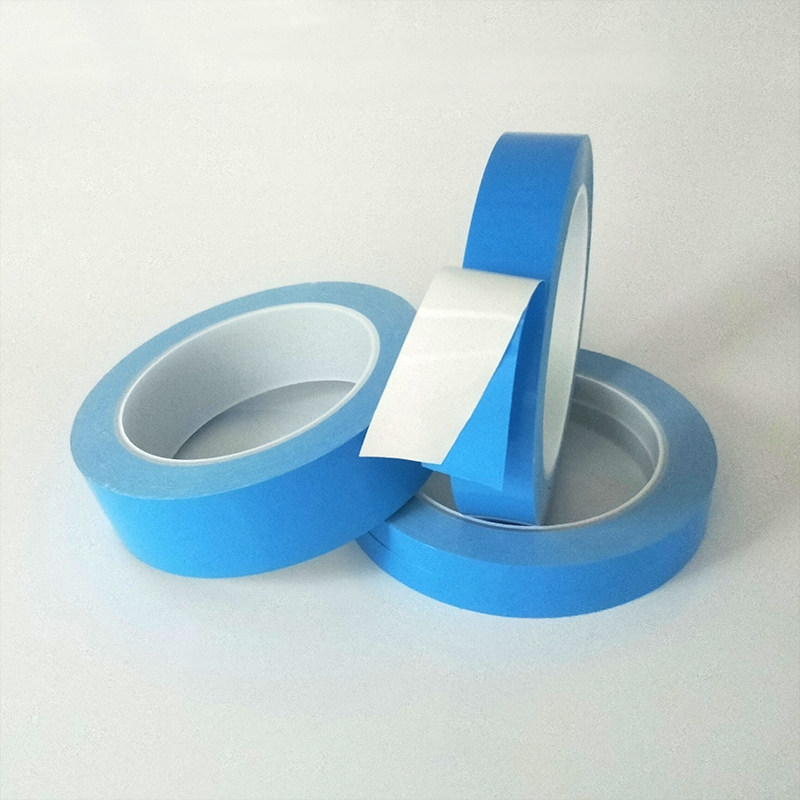
Product overview
Thermally conductive double-sided tape uses a ceramic-filled polymer with silicone pressure-sensitive adhesive on both faces to couple a heat source to a heat sink. It combines thermal transfer, electrical insulation, flexibility, compression and adhesion, filling small surface irregularities and assembly gaps to shorten the heat path. Reference conductivity is 1.5 W/m·K; common thicknesses are 0.15, 0.20, 0.25, 0.30, 0.35 and 0.50 mm, with about 120°C continuous and 180°C short-term resistance.
Product features
- Reference thermal conductivity of 1.5 W/m·K transfers heat from chips, LEDs, power modules and other sources to heat sinks.
- The ceramic-filled structure also provides electrical insulation between electronic parts.
- Soft, compressible and conformable material fills rough surfaces and small assembly gaps.
- Double-sided pressure-sensitive adhesive completes thermal interface contact and fixes lightweight parts.
- Reference temperature resistance is about 120°C continuous and 180°C short term; verify against load and duration.
- Available in 0.15-0.50 mm common thicknesses with custom width, length, sheets and die-cut profiles.
- Simple peel-and-press assembly; parts can be die-cut to match heat sinks, chips and modules.
Applications
- Thermal bonding between LED chips, strips and lighting modules and aluminum boards or heat sinks.
- Heat transfer, insulation and fixing for chips, CPUs, power devices, PCBs and electronic modules.
- Thermal management in power supplies, adapters, displays, communications and industrial controls.
- Thin thermal interfaces inside battery modules, automotive electronics and compact appliances.
Procurement notes
Provide conductivity, total thickness, width, length, temperature, insulation requirement, substrates, assembly pressure, quantity and delivery form. For die cutting, submit a drawing with tolerance, release method and array layout. Test thermal resistance, adhesion, temperature and long-term aging on the actual heat source and sink before volume production.
Get a quote plan
Just state your usage scenario and we can provide you with a quote! Thank you for your cooperation!