
Barcode card production, barcode card design and printing, barcode card manufacturer
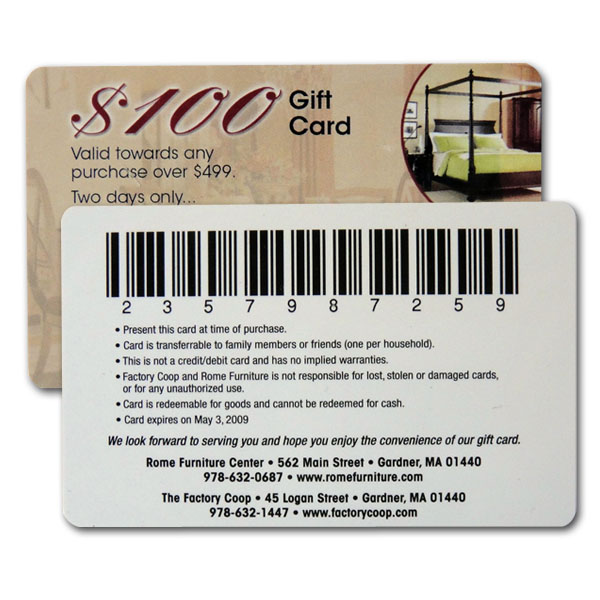
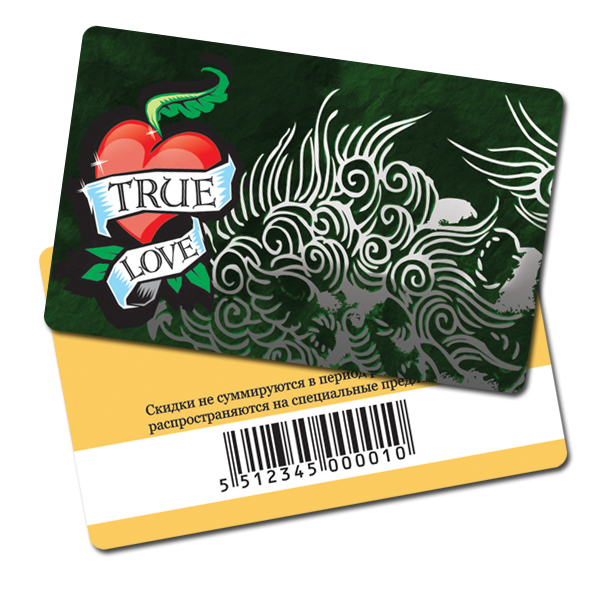
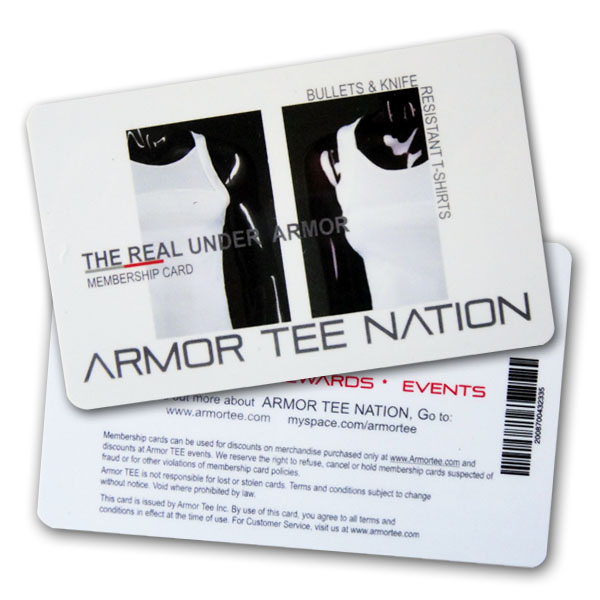
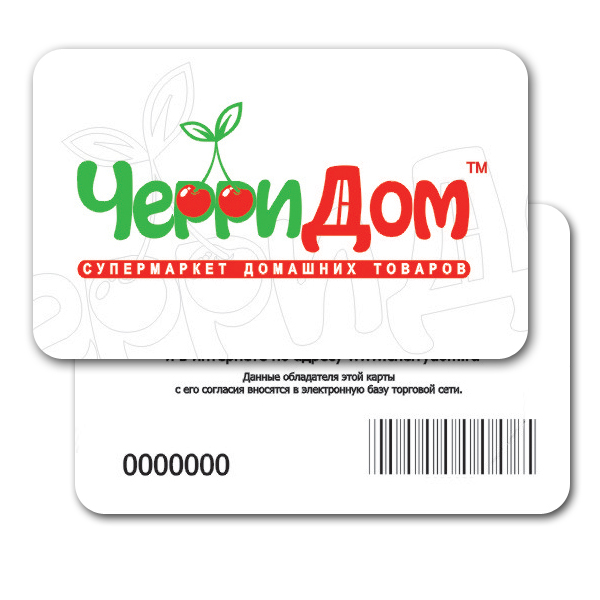
Barcode cards are made by adding a barcode process to ordinary PVC cards, and are called barcode cards. Barcodes enable ordinary PVC cards to be used to identify barcode information.
.jpg)
Introduction to barcode cards
Barcode cards are made by adding a barcode process to ordinary PVC cards, and are called barcode cards. Barcodes enable ordinary PVC cards to be used to identify barcode information.
Barcode card usage
Barcode cards can earn points, but cannot be stored for value. Merchants must use barcode cards together with commercial POS cash registers. Commercial POS cash registers come with a points system. After finding the system on the commercial POS cash register, set up your membership points. Once set, use the scanner to scan the barcode on the barcode card. The system will automatically generate the points information.
Benefits of barcode cards
1. Low cost
The cost is slightly lower than magnetic stripe cards. If merchants don't need stored-value but want to give regular customers a formal and practical gift, barcode cards are a good choice.
2. Easy to use
Card swiping is convenient and quick for recognition, but compared to magnetic stripes, there is no problem of demagnetization due to improper use, meaning similar demagnetization does not occur.
3. High reliability
Barcode recognition technology is quite mature, with a reading error rate of about one in a million and a first read rate greater than 98%. It is a highly reliable, fast input, accurate, low-cost, and widely applicable automatic data collection technology.
Barcode card type
There are about 225 types of one-dimensional barcodes worldwide, each with its own set of encoding specifications, specifying that each letter (which may be a letter, number, or literal digit) consists of several bars and spaces, as well as the arrangement of the letters. Commonly popular one-dimensional barcodes include 39 codes, EAN codes, UPC codes, 128 codes, as well as ISBN and ISSN codes specifically used for book and periodical management.
Here, focusing solely on card manufacturing, we will specifically explain the commonly used 39 codes, EAN codes, UPC codes, and 128 codes on the market:
1. Size 39
1. There is no length limit for barcodes; they can be flexibly adjusted according to demand. However, when planning the length, consider the range allowed by the barcode reader to avoid missing complete data during scanning.
2. The start and end codes must be fixed to the character "*".
3. Allows barcode scanners to perform bidirectional scanning.
4. Since the 39 code has self-checking capability, the check code is optional and does not necessarily need to be set.
5. Barcodes take up a lot of space.
2. EAN Code
1. Only digital storage is possible.
2. Supports bidirectional scanning, meaning barcodes can be scanned from left to right or right to left.
3. There must be a checkcode to prevent errors in data reading, located at the far right of the EAN code.
4. Equipped with left, center, and right guards, separating different parts of the barcode and creating appropriate safe spaces for handling these issues.
5. Barcodes have a fixed length and lack flexibility, but with appropriate channels, they can be used worldwide.
3. UPC code
UPC barcodes are also used for goods, mainly in the United States and Canada. UPC barcodes are a type of barcode established by the U.S. Uniform Code Committee. Some Chinese exporters to North America also need to apply for UPC barcodes to meet the needs of North America. UPC barcodes come in two versions: standard and shortened. The standard version consists of 12 digits, while the shortened version has 8 digits, which is one digit less than the standard EAN barcode, but the shortened version has the same number of digits.
4. 128 yards
1. Supports three different encoding types: A, B, and C, providing encoding for 128 characters from the standard ASCII.
Allows for two-way scanning processing.
2. You can decide whether to add a check code yourself.
3. Barcode length can be freely adjusted, but including the minimum and end codes, it must not exceed 232 characters.
4. The same 128 code can be encoded in different ways. By swapping the three different encoding rules A, B, and C, the range of character selection can be expanded, and the encoding length can be shortened.
Barcode card manufacturing methods and processes
1. Use PVC material or coated paper as the basis to print different patterns on the card
2. Barcode cards can be designed based on materials provided by the customer, or the design draft can be provided by the customer.
3. Barcode cards can be made from 0.30mm to 0.76mm in thickness, and can also be made in other thicknesses.
4. The standard size of a barcode card is 85.5mm x 54mm, with rounded corners. It can also be made in other sizes.
5. Barcode cards can be printed on either single-sided or double-sided printing, using screen printing or offset printing (CMYK four-color printing) methods.
6. Each barcode card can be sprayed with different numbers, PIN codes, or text.
7. Barcode cards can be marked with signature slips or writing boards (areas where manual writing is allowed).
8. Barcode cards can be equipped with low-density or high-density magnetic stripes (three-track magnetic stripes) according to customer requirements.
9. Barcode cards can be embossed, and the embossed codes can be stamped in gold or silver.
10. You can punch round or strip holes on barcode cards.
11. Scratch strips can be printed on barcode cards (commonly used for recharge cards, phone cards, lottery cards, etc.).
12. Barcode cards can be printed with various types of barcodes.
13. Barcode card numbers can be arranged sequentially or used for personalized, irregular numbers.
14. Barcode cards can be made into square, round, or any other irregular shape.
15. The background color of barcode cards can be made to imitate gold or silver.
16. You can stamp the barcode card with gold or silver color.
17. The surface of barcode cards can be made matte or glossy, with a matte finish.
18. Barcode cards can use white car wash materials, matte transparent materials, or fully transparent materials.
Our factory specializes in manufacturing, printing, and designing barcode cards. If needed, please contact us. Contact information is available on our website
Get a quote plan
Just state your usage scenario and we can provide you with a quote! Thank you for your cooperation!