
RFID high-frequency tags
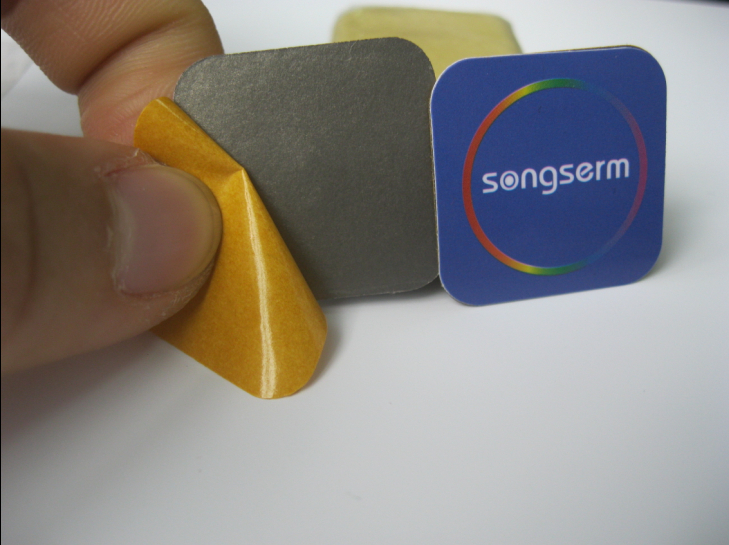
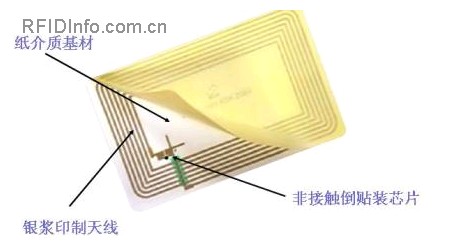
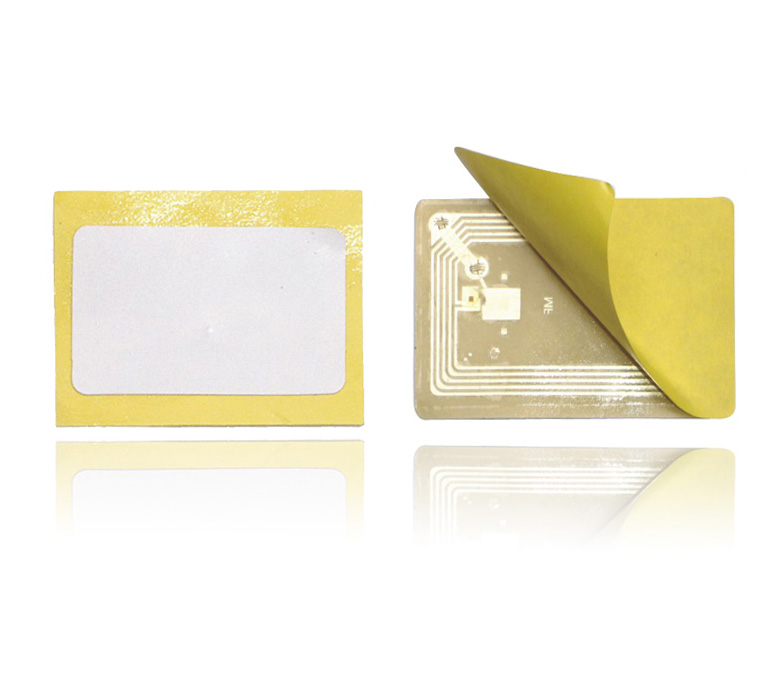
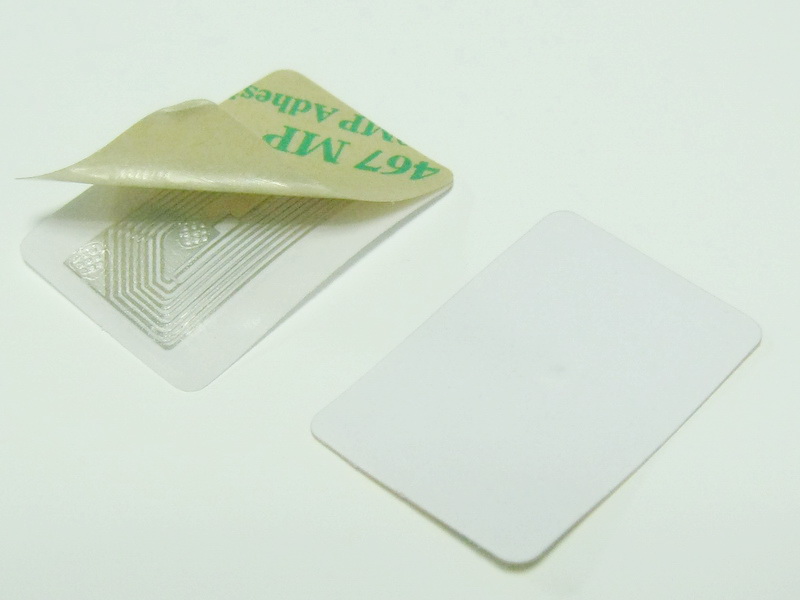
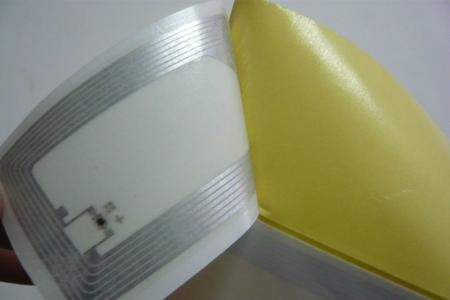
High-frequency RFID electronic tags are mainly synthesized from antennas, which are made by etching or printing. The difference from high-frequency cards is that they have longer read/write distances, stable performance, fast read/write speeds, and sensitive signal response; Label sizes of any specification can be designed to meet different user needs; Label materials are diverse and soft, allowing for arbitrary packaging; Multiple readings can be read simultaneously, with anti-collision features.
.jpg)
High-frequency RFID electronic tags are mainly synthesized from antennas, which are made by etching or printing. The difference from high-frequency cards is that they have longer read/write distances, stable performance, fast read/write speeds, and sensitive signal response; Label sizes of any specification can be designed to meet different user needs; Label materials are diverse and soft, allowing for arbitrary packaging; Multiple readings can be read simultaneously, with anti-collision features.
RFID high-frequency electronic tags are mainly used here
1. Application of safe campus and home-school entrance and exit corridors
2. Application of library management systems
3. Attendance application for personnel in enterprise parks, shaft construction sites, and civil explosives enterprises
4. Anti-counterfeiting applications for consumables
5. Tooling and washing management applications
6. Large conference personnel access system
7. Fixed asset management system
8. Management and application of pharmaceutical logistics systems
9. Management of intelligent shelves
10. Jewelry inventory management.
Characteristics of RFID high-frequency electronic tags
1. The operating frequency is 13.56MHz, which has a wavelength of approximately 22m.
2. Except for metallic materials, wavelengths at this frequency can pass through most materials, but often reduce the reading distance. Tags need to be at least 4mm away from the metal, and their anti-metal performance is relatively good in several frequency bands.
3. This band is recognized worldwide with no special restrictions.
4. Sensors generally take the form of electronic tags.
5. Although the magnetic field region at this frequency drops rapidly, it can produce a relatively uniform read/write region. This system features collision-resistant features and can simultaneously read multiple electronic tags.
7. Certain data information can be written into tags.
Technical applications of RFID high-frequency electronic tags
Short-range RFID products are not afraid of harsh environments such as oil stains and dust contamination, and can replace barcodes in such environments, for example when tracking objects on factory assembly lines.
Long-range RFID products are mostly used in traffic, with recognition distances reaching tens of meters, such as automatic toll collection or vehicle identity verification.
1. In retail, the application of barcode technology has made every link of tens of thousands of product types, prices, origins, batches, shelves, inventory, and sales managed in an orderly manner.
2. By adopting automatic vehicle identification technology, paid places such as roads, bridges, and parking lots avoid vehicle queues for customs clearance, reducing time wasted and greatly improving transportation efficiency and the capacity of transportation facilities.
3. On automated production lines, every stage of the entire product manufacturing process is under strict monitoring and management
4. In harsh environments such as dust, pollution, cold, and heat, the use of long-distance RFID technology improves the inconvenience of truck drivers having to get out of the vehicle to complete procedures.
5. In bus operation management, the automatic recognition system accurately records the arrival and departure times of vehicles at various stops along the route, providing real-time and reliable information for vehicle dispatch and full-process operation management.
6. In equipment management, the RFID automatic identification system can bind the specific location of the device to the RFID reader, recording the process when the device moves out of the designated reader's position.
RFID electronic tags have a wide range of technical applications. Typical applications include: animal chips, access control, air parcel identification, document tracking management, parcel tracking and identification, animal husbandry, logistics management, mobile commerce, product anti-counterfeiting, sports timing, ticket management, automotive chip anti-theft devices, parking lot control, production line automation, material management, and more.
RFID high-frequency tagsKnowledge advancement
1. Working Methods
The basic operating modes of RFID systems are divided into Full Duplex, Half Duplex, and Sequential (SEQ) systems.
Full-duplex means that the RFID tag and the reader/writer can transmit information to each other at the same time. Half-duplex means that information can be transmitted bidirectionally between the RFID tag and the reader/writer, but only in one direction at a given time.
In full-duplex and half-duplex systems, the RF tag's response is transmitted in the form of electromagnetic fields or waves emitted by the reader/writer. Because compared to the signal from the reader itself, the RF tag's signal is very weak on the receiving antenna, it is necessary to use appropriate transmission methods to distinguish the signal from the reader's signal. In practice,People generally use load reflection modulation technology to load the RFID tag data onto the reflected echo for data transmission from RFID tags to readers (especially for passive RFID tag systems).
The timing method is the opposite, where the electromagnetic field emitted by the reader is periodically disconnected for short periods. These gaps are identified by RFID tags and used for data transmission from the RFID tag to the reader. In fact, this is a typical radar operating method. The drawback of the timing method is that during reader transmission intervals, the energy supply to the RF tag is interrupted, which must be compensated by installing sufficiently large auxiliary capacitors or auxiliary batteries.
2.Data volume
The data volume of RFID RFID tags typically ranges from a few bytes to several thousand bytes. However, there is one exception: the 1-bit RF tag. It only needs 1 bit of data to allow the reader to make two judgments: "There is an RF tag in the electromagnetic field" or "No RF tag in the electromagnetic field." This requirement is fully sufficient to implement simple monitoring or signal transmission functions. Because a 1-bit RFID tag does not require an electronic chip, the cost of the RFID tag can be made very low. For this reason, a large number of 1-bit RFID tags are used in department stores and stores for product anti-theft systems (EAS). When leaving a department store with unpaid goods, readers installed at the exit can identify the situation of "radio frequency tags in the electromagnetic field" and trigger corresponding reactions. For goods that have been paid for according to regulations, the 1-bit RFID tag is removed or deactivated at the checkout.
3.Programmable
Whether data can be written to RFID tags is another factor distinguishing RFID systems. For simple RFID systems, the data on RFID tags is mostly a simple (sequential) number that can be integrated during chip processing and cannot be changed later. In contrast, writable RFID tags write data through readers or dedicated programming devices.
Data writing on RFID tags is generally divided into two forms: wireless writing and wired writing. Currently, the RF tags used in locomotives and freight cars in railway applications all use wired writing methods.
4.Data carriers
To store data, three main methods are used: EEPROM, FRAM, and SRAM. For general RFID systems, using Erasable Programmable Read-Only Memory (EEPROM) is the main method. However, the drawback of this method is that it consumes a lot of power during the write process, and its lifespan is generally 100,000 write cycles. Recently, some manufacturers have also started using so-called ferroelectric random access memory (FRAM). Compared to erasable programmable read-only memory, ferroelectric random access memory reduces write power consumption by 100 times and writes by even 1000 times. However, due to issues in production, ferroelectric random access storage has not yet been widely adopted. FRAM belongs to the non-volatile class of storage.
For microwave systems, static random access memory (SRAM) is also used, which can quickly write data. To preserve data permanently, auxiliary batteries are needed for uninterrupted power supply.
5.State mode
For programmable RF tags, the "internal logic" of the data carrier must control the write/read operations on the tag memory and the authorization requests for write/read authorization. In the simplest case, a state machine can accomplish this. Using a state machine allows for very complex processes. However, the drawback of state machines is the lack of flexibility in modifying programming functions, which means designing new chips requires modifying circuits on silicon chips, making design changes costly.
The use of microprocessors has significantly improved this situation. During chip manufacturing, the operating system used to manage application data is integrated into the microprocessor via masking, with minimal modification. Additionally, the software can be adjusted to suit various specialized applications. Additionally, there are RFID tags that store data using various physical effects, including read-only surface wave (SAW) RFID tags and 1-bit RFID tags that can usually be deactivated (write "0") and rarely reactivated (write "1") by 1-bit RF tags.
6.Energy supply
An important feature of the RFID system is the power supply of the RFID tag. Passive RF tags have no power supply themselves. Therefore, all the energy used for the operation of passive RFID tags must be obtained from the electromagnetic field emitted by the reader. In contrast, active RFID tags contain a battery that provides all or part of the energy (the "auxiliary battery") for the microchip's operation.
7.Frequency range
Another important feature of RFID systems is their operating frequency and reading distance. It can be said that the operating frequency is closely related to reading distance, which is determined by the propagation characteristics of electromagnetic waves. The operating frequency of an RFID system is usually defined as the frequency at which the reader sends the RF signal when reading the RFID tag. In most cases, this is called the reader transmission frequency (load modulation, backscatter). In any case, the "transmit power" of RF tags is much lower than that of readers.
The frequencies sent by RFID system readers generally fall into three ranges:
(1) Low frequency (30kHz ~ 300kHz);
(2) Mid-high frequency (3MHz ~ 30MHz);
(3) Ultra-high frequency (300MHz ~ 3GHz) or microwave (>3GHz).
Based on the range of action, additional classifications of RFID systems are:
Tight coupling (0 ~ 1 cm),
Remote coupling (0 ~ 1m) and
Long-range system (>1m).
8.RF tags → data transmission for readers and writers
There are various ways for RF tags to send data back to the reader, which can be summarized into three categories:
(1) Use load modulation for reflection or backscattering (the frequency of the reflected wave matches the frequency of the reader's transmission);
(2) Using subharmonics of the reader's transmission frequency to transmit tag information (the tag's reflected wave differs from the reader's transmission frequency, representing its higher-order harmonics (n times)
or divided harmonics (1/n times);
(3) Other forms.
Get a quote plan
Just state your usage scenario and we can provide you with a quote! Thank you for your cooperation!