
Contactless IC card manufacturing for smart cards
Contactless IC card manufacturing for smart cards
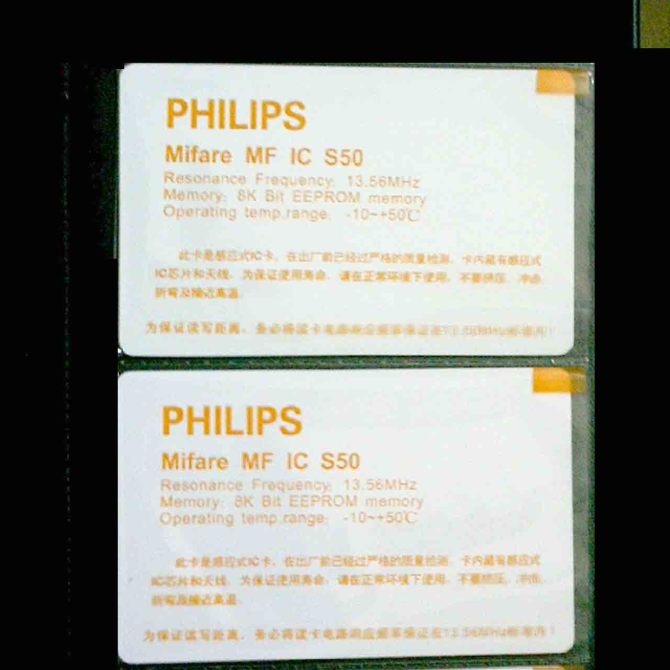
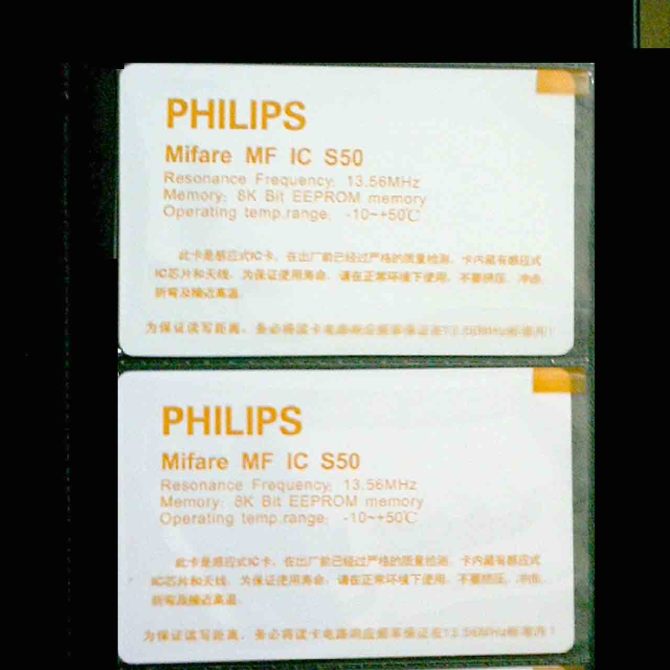
The manufacturing of contactless IC cards for smart cards is actually what we commonly refer to as contactless cards
What are the advantages of contactless IC cards?
(1) High reliability: It has no mechanical contact with the reader, avoiding various faults caused by contact read/write, such as poor contact, rough card insertion, chip detachment, breakdown, or bending damage.
(2) Easy and fast operation: Thanks to contactless communication, the reader can operate cards within a 10CM range without directional orientation, making it very convenient for users and improving efficiency.
(3) Collision prevention: Contactless cards have a fast anti-collision mechanism that prevents data interference between cards, allowing multiple cards to be processed "simultaneously" in parallel and improving system speed.
(4) Suitable for multiple applications: The card's storage structure makes it multi-functional, and by setting passwords and access conditions, it can be applied to different systems.
(5) Good encryption performance: The serial number of contactless IC cards is unique and is fixed by the manufacturer and cannot be changed. Each sector in the card has its own operation password and access conditions. The card and reader/writer use a two-way authentication mechanism, and all data during communication is encrypted. Therefore, it is very suitable for applications such as electronic wallets, highway automatic toll collection systems, and bus automatic ticketing systems.
The storage capacity of this type of card generally ranges from 256b to 72kb. The most popular technologies currently include Legic, Mifare, Desfire, iCode, and HID iclass, and also chips that comply with ISO14443 A&B communication protocols. It is usually used in places like access control, bus fares, and subway fares where you need to "pass through in a flash."
Introduction to commonly used contactless chips
Common contactless IC cards include Mifare 4K (S70), Mifare 1K (S50), and FM11RF08 series chips. We won't go into all of them here. Introducing a commonly used one.
Mifare S50 Features:
Product name: Mifare 1K (s50) card
Chip type: Philips Mifare 1 IC S50
Storage capacity: 8Kbit, 16 partitions, two passwords per partition
Operating frequency: 13.56 MHz
Communication rate: 106KBoud
Read/write distance: 2.5~10cm
Read/write time: 1~2ms
Operating temperature: -20°C~55°C
Erase and writing lifespan: > 100,000 cycles
Data retention: > 10 years
Dimensions: ISO standard card 85.6x54x0.82
Packaging materials: PVC, PET, PETG, 0.13mm copper wire
Packaging process: Ultrasonic automatic wire placement / automatic contact welding
Standard: ISO14443A
Typical applications: enterprise/campus all-in-one card, public transport stored-value cards, highway toll collection, parking lots, community management, etc.
Contactless IC cards offer competitive advantages in the market
As ordinary membership cards become more popular in the market, more and more manufacturers are attracting customers with lower prices, resulting in low prices in the entire card manufacturing industry. People simply can't make money from regular membership cards; most of the business is favoritism and market dealings. In other words, if I offer you a lower price this time, I hope you'll come back to make cards next time. This is essentially a form of returning customers. As more manufacturers join in, the competitive environment will become even harsher, so the market needs innovation. Enterprises need to change. Although our company currently has many membership card orders, we will gradually shift to smart card production in the future. So, what competitive advantages does smart card manufacturing have in the market?
1、Contactless IC cardsIt has technical content
Unlike ordinary membership cards, smart cards are not just about buying materials and printing and laminating them. This involves data manipulation of the smart card chip, which contains a lot of data and requires importing the customer's required information into the chip. This requires a certain level of technical expertise and is not something every manufacturer can do. Since your information is ultimately stored in the chip, the card writing process is also very important.
2、Contactless IC cardsEasier to make
Because the chip is laminated inside the card, smart cards do not experience demagnetization, damage, or other issues like ordinary membership cards. Moreover, the chip lifespan and security performance of smart cards are more than ten times better than those of ordinary membership cards. For ordinary membership cards, our company only needs a sample card to replicate it, but smart cards are different—they can only produce identical patterns but can never replicate the information inside.
Introduction to contactless CPU chips
The chip type is a Fudan Fm1208 CPU IC card
The main product features include:
1: Data space of 16K and 32K, meeting basic secure data storage requirements
2: Supports binary files, fixed-length record files, loop record files, and wallet files
3: Supports DES, 3DES, and MAC algorithms
4: Supports external authentication keys, encryption/decryption keys, dynamic encryption keys, and password keys
5: Supports data encryption, MAC operations, key distribution, and dynamic key encryption functions
6: Supports ISO7816 T=O protocol, with a communication rate of 56K
Safety features:
1: The chip hardware platform has ITSECEAL4-level certification
2: Chip tamper-resistant design, unique serial number, with measures to prevent SEMA/DEMA, SPA/DPA, DFA, and timing attacks
3: Various safety detection sensors, including high and low voltage sensors, frequency sensors, filters, light sensors, and pulse sensors
4: Temperature sensor with sensor life testing function; once the chip detects illegal detection, it activates the internal self-destruct function
5: Bus encryption with a metal shielding protective layer, internal data self-destruction upon detection of external attacks
Technical specifications
1: Voltage 3V-5V (±10%)
2: Ambient temperature -25°C to +85°C
3: Maximum current: 10mA
4: External frequency support range from 1 to 10MHz
5: 4KV electrostatic protection
6: Communication protocol is ISO-7816/3 standard, baud rates can be selected as 9600/19200/38400/57600 BPS
7: The packaging format is a standard card
Get a quote plan
Just state your usage scenario and we can provide you with a quote! Thank you for your cooperation!