
.jpg)
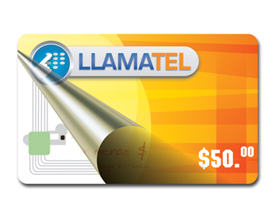
Induction card production
We specialize in making cards and have all the equipment needed for making contactless cards. A contactless card refers to a new type of contactless card. Non-contact means that the card does not make any contact with the machine; you only need to place the card on the machine to complete the entire usage process. Typical applications: using contactless cards for bus card swiping, using cards for corporate access control systems, using cards for dining in cafeterias, using contactless cards in parking lots, and so on:
Therefore, the use of proximity cards is very broad. So, compared to them, what are the advantages and benefits of proximity cards?
There is no mechanical contact between the induction card and the reader/writer, avoiding various faults caused by contact with read/write. For example: faults caused by rough card insertion, insertion of non-card objects, or poor contact caused by dust or oil contamination. In addition, the induction card surface has no exposed chips, eliminating concerns about chip detachment, static electricity breakdown, bending damage, and other issues. This not only facilitates card printing but also improves card reliability.
Contactless cards have a fast anti-collision mechanism to prevent data interference between cards, so readers and writers can process multiple contactless cards "simultaneously." This improves application parallelism and invisibly speeds up system operation.
Compared to traditional contact cards, contactless cards have a much longer lifespan because, being passive, they do not require any additional costs or maintenance. Contactless cards are highly profitable products and indispensable items in daily life.
Introduction to the proximity card:
An RFID card, also known as an RFID card, is made up ofICChips,Responding to HeavenThe line is composed and packaged in a standard formPVCInside the card, there are no exposed parts of the chip or antenna. It is a new technology developed in recent years worldwide, successfully combining RFID technology with contactless card technology, solving the problems of passive (no power supply in the card) and contactless requirements, marking a major breakthrough in the field of electronic devices. Cards within a certain distance range(Usually5—10mm)Close to the reader's surface, data read/write operations are completed through radio wave transmission.
An RFID card is a new type of smart card, with functions similar to that of contact SIM cards,IDThe card is the same, except it does not require a power supply; instead, the receiving antenna draws power from the reader's magnetic field and processes data to feed back to the reader. Sensor card by defaultICThe chip consists of an induction antenna and is completely sealed under a single standardPVCThe card contains no exposed parts. The read/write process of an inductive card usually involves radio waves between the card and the reader/writer to complete the read/write operation. The inductive card itself is a passive entity. When the reader performs a reading or write operation on the card, the signal sent by the reader consists of two parts: one is the power signal, which, after being received by the card, is combined with its own signalL/CResonance is generated, generating a momentary energy to supply the chip to operate. The other part combines data signals to direct the chip to complete data, modifications, storage, etc., and then return it to the reader/writer. The read/write system formed by contactless inductive cards greatly simplifies both hardware structure and operation processes. At the same time, advanced management software and offline operation methods make data reading and writing much simpler.
Contactless cards are currently the most widely used and frequently used new type of smart card. We see them everywhere: enterprise access control uses contactless cards, schools use cards for meals, elevators use cards for card swiping, and campus all-in-one cards use contactless cards. This shows that contactless cards are used very frequently and widely in daily life. So, what exactly are contactless cards, and why are they so magical?
Probing Card Dimensions:IS0Standard card85.6×54×0.80 /Thick card/Alien cards
Inductive Card Storage Capacity:8Kbit,16Partitions, with two sets of passwords per partition
Operating frequency of the induction card:13.56MHz
Induction card communication speed:106KBoud
Reading and writing distance of the proximity card:2.5~10cm
Reading and writing times for proximity cards:1~2ms
Induction card operating temperature:-20℃~85℃
Lifespan of the induction card for erasing and writing:>100,000Times
Contactless Card Data Storage:>10Year
Induction Card Packaging Materials:PVC、ABS、PET、PETG、0.13mmCopper wire
Induction card packaging process: ultrasonic automatic wire placement/Automatic contact welding
Standards for proximity cards:ISO 14443,ISO 10536
Contactless card function: supports multi-purpose use with one card
Typical applications of contactless cards: enterprises/Campus all-in-one card, public transport stored-value cards, highway toll collection, parking lots, residential communities/Park management, etc
Advantages of proximity cards:
The inductive cards used are currently the most widely used, most mature, most stable in performance, and have the largest memory capacity in the worldMIFAREThe card retains the contact typeICIn addition to the original advantages, the card also has the following features:
High reliability
There is no mechanical contact between the induction card and the reader/writer, avoiding various faults caused by contact with read/write. For example:Faults can be caused by rough card insertion, insertion of non-card objects, dust, or oil stains causing poor contact. In addition,,The surface of the induction card has no exposed chips, eliminating concerns about chip detachment, static electricity breakdown, bending damage, and other issues. This not only facilitates card printing but also improves card reliability.
Easy to operate
Due to contactless communication, the reader and writer are present10CMYou can operate the card within the range, so there's no need to insert or dial a card, making it very convenient for users to use. Contactless cards have no directionality when used; they can glide across the reader's surface in any direction, completing operations and greatly improving the speed of each use.
Conflict prevention
Sensing cards include a quick anti-collision mechanism,It prevents data interference between cards, so the reader can process multiple contactless cards "simultaneously." This improves application parallelism,,This invisibly increases system operating speed.
Suitable for a variety of applications
The serial number of the proximity card is unique, and the manufacturer has already stabilized this serial number before the product leaves the factory,It must not be changed again.
A two-way verification mechanism is used between the contactless card and the reader/writer, meaning the reader verifies the legitimacy of the contactless card, and the proximity card also verifies the legitimacy of the reader/writer.
Before processing, the proximity card must undergo three mutual authentication with the reader, and all data during communication is encrypted. Additionally, each sector on the card has its own operation password and access requirements.
Encryption performance is good
Sensor card by defaultICThe chip consists of an induction antenna and is completely sealed under a single standardPVCThe card contains no exposed parts. The read/write process of an inductive card usually involves radio waves between the card and the reader/writer to complete the read/write operation.
Composition:Part of it is the power signal, which is received by the card and then by itselfL/CResonance is generated, generating a momentary energy to supply the chip to operate. The other part combines data signals to direct the chip to complete data, modifications, storage, etc., and then return it to the reader/writer. The read/write system formed by the inductive card greatly simplifies both hardware structure and operation processes. At the same time, advanced management software and offline operation methods make data read/write much simpler.
Instructions for making proximity cards
1: The correct draft iscoreldraw,AI,photoshop,pdfDocuments. Text, symbols, and patterns must be converted to curves, with special effects converted into bitmap images;
2:Inner Frame Specifications:85.5mm*54mm,Frame specifications:88.5mm*57mm,The card fillets are 12Degree;
3: The small bump code is14The font size is large, with large raised codes as 18The font can be represented by Heiti,Small and large convex codes include spaces at most19Position. Embossed codes can be gold-foiled, silver-foiled, or other gold and silver types. Special requirements can be personalized embossed designs;
4: The margin between the prominent code and the card must be greater than 5mmThe inner edge (top and bottom) of the magnetic strip spacer card is as follows4mmThe magnetic stripe width is 12mm;
5: Contactless typeICCard: The embossed code design should not press the chip on the back, otherwise the chip will not be able to swipe the card;
6: The raised code design should not be pressed to the reverse sideICOtherwise, the chip cannot read barcode data,ICCards reserve slots based on the barcode model provided by the customer;
7: Color gradation: The ideal stage range is within the range18%-85%If the highlight is lower18%Or the darker tone section is higher85%the color gradient is poor;
8: The color mode should be CMYKFront and back are filled in pure black text or black backgroundK100Solid color blocks with white text should be reversed, with white borders added;
9: The thickness of the lines must not be less than that0.076mmOtherwise, the print will not be presented;
10: The background pattern or background color should not be set below the required level8%To avoid being unable to present printed waste;
11: Before placing an order, documents for producing contactless cards should include the following items in the manuscript:
AIndicate how many cards are produced in total,Indicate which card number it starts from and any special requirements,Is the card number small bump, large bump code, flat code, or spray code?
Do you need gold stamping, silver stamping, or no color stamping? How many signature strips are there on the back? Card number or suffix is used for "4Or"7Should it be removed;
BIf the front has patterns or text that require gold or silver stamping, it should also be emphasized;
CIf there are special manufacturing processes for probing cards, they should be detailed in the order manuscript.
12: Because the card printing media is different, the printed scrap will have some color difference compared to the color shown or printed on the computer;
13: Coloring must be done according to the requirementsCMYKColor book filling, computer screen colors, and printer printing colors cannot be used as printing colors;
Get a quote plan
Just state your usage scenario and we can provide you with a quote! Thank you for your cooperation!