
IC card manufacturing, IC card manufacturer, IC card production
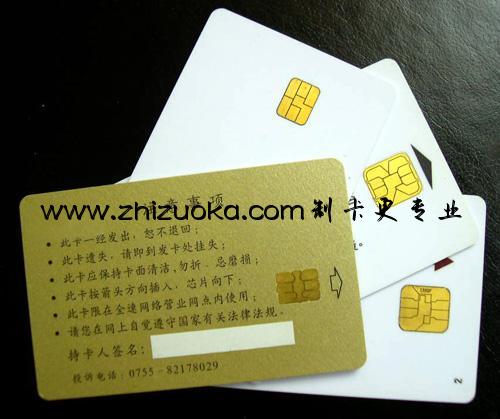
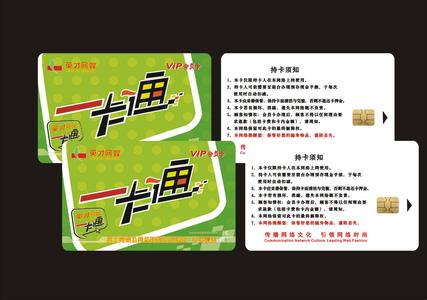
IC card manufacturing, IC card manufacturer, IC card production. IC cards are made by laminating chip coils from PVC or high-temperature resistant materials. The cards can be offset, personalize images, silk-screen, inkjet, dustproof, waterproof, and vibration-resistant. Various different chips can be selected for installation. The IC card is packaged inside a standard PVC card, with no exposed parts of the chip or antenna.
.jpg)
ICCard Summary:
ICCards , byPVCor high-temperature resistant materials laminated with chip coils. The cards can be offset printed, personalized image processing, silkscreen printing, inkjet printing, dustproof, waterproof, and vibration-resistant, and can be installed with various different chips.ICThe card is packaged in a standard formatPVCInside the card, there are no exposed parts of the chip or antenna. It has developed in the world in recent years A new technology has emerged,It successfully integrates RFID technology and...ICCombining card technology,End of sourcelessness(There is no power supply in the card)And avoid this challenge,This is a major breakthrough in the field of electronic devices, with cards within a certain range of distance(Usually5—10mm)Close to the reader's surface, data read/write operations are completed through radio wave transmission.
ICCards are roughly divided into two main categories:
First: ContactlessicCard:
ContactlessICThe card uses contactless read/write to avoid various faults caused by contact read/write. Unaffected by obstacles, accompanying partitions can still be read and written normally. Additionally,,ContactlessICThe card chip is hidden in the middle of the plastic section, so there's no need to worry about it falling off,Issues such as static electricity breakdown, bending, and damage not only facilitate card printing but also increase the usability of the card.
ContactlessicCommon cards are availableMifare 4K(S70)、Mifare 1K(s50)、FM11RF08series of chips. We won't go into all of them here. Introducing a commonly used one.
MifareS50Features:
Product Name:Mifare 1K(s50)Cards
Chip Type:Philips Mifare 1 IC S50
Storage capacity:8Kbit,16Partitions, with two sets of passwords per partition
Operating frequency:13.56 MHz
Communication Speed:106KBoud
Read/write distance:2.5~10cm
Reading and writing time:1~2ms
Operating temperature:-20℃~55℃
Erase and write lifespan:>100,000Times
Data Storage:>10Year
Dimensions:ISOStandard card 85.6x54x0.82
Packaging materials:PVC、PET、PETG、0.13mmCopper wire
Packaging process: ultrasonic automatic wire placement / Automatic contact welding
Standards Implemented:ISO14443A
Typical application: Enterprises/Campus all-in-one card, public transport stored-value cards, highway toll collection, parking lots, community management, and more.
2. Contact typeicCard:
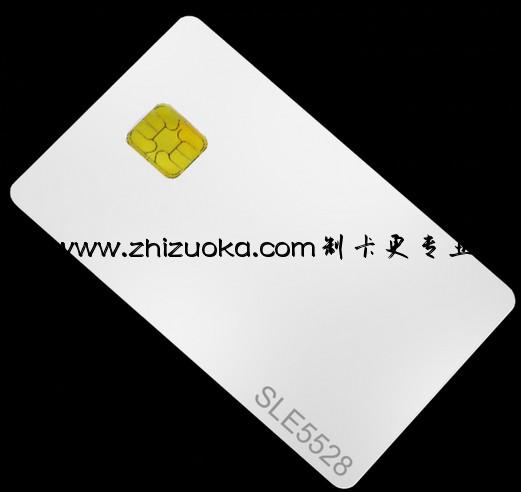
Contact typeICThere are three types of cards: memory cards or memory cards (Memory Card); IncludedCPUSmart card (Smart Card); Equipped with a monitor and keyboard,CPUSuper smart card. Its advantages are large storage capacity, strong security and confidentiality, and easy portability. Contact typeicCommon chips for cards include:SLE4428、SLE4442、FM4442Chips. Here, we also introduce one method.
1、SLE4442Key indicators:
32Bit-protected memory;
256ByteEEPROM;
3ByteDance user password, password error count:3Next;
Temperature range:0℃~70℃;
At least10Erased ten thousand times;
At least10Annual data retention period.
Operating voltage:5V。
2Confidentiality Features:
Written about the reserve (former).32Each byte of the byte can be written separately. After write protection, the content is not
It can be modified again (i.e., the data is solidified).
Before password verification is correct, all data is readable; if necessary, data can be appropriately encrypted.
After verifying the password is correct, it can be written or modified.
The three-byte user password can be changed after verification, and is valid until the card is powered off.
Password error counter, initial value is 3Password verification error1Next, then reduce it1, if the counter value is 0, then
The card is automatically locked, data can only be read, and it cannot be changed or password verified; If it is not zero hour,
Once the password is verified correctly, it can be restored to the initial value.
Byte address21~26For user codes, our company can set up a globally unique code specifically for large users, so that
This allows users to issue and use them uniformly (all cards cannot be modified after leaving the factory).
Byte address0~5、6~7It is written by the manufacturer before leaving the factory and cannot be changed.
3, attention
The password area is separately addressed and not here0~256Within bytes.
ContactlessicSnap-and-contact typeicCard Comparison:
The biggest difference between the two is the contact typeICThe card chip is packaged inPVCIn the material card, the chip is exposed and must contact the card slot or other card reading equipment to read or write data; ContactlessICThe card chip is packaged inPVCIn the data, the chip's radio waves can be sensed remotely with the card reader to read data. In contrast, contactless methodsICThe card offers good confidentiality, high security, and large storage capacity.
ICAdvantages of the card:
1、ICKa Neng is widely used in finance, telecommunications, transportation, commerce, social security, taxation, healthcare, insurance, and other fields, covering almost all public utility sectors.
2、ICThe card is anti-magnetic, anti-static, resistant to mechanical damage, and chemical damage, with a long information retention period and tens of thousands of read/write cycles.
3Long service life and can be recharged repeatedly.
4、ICThe card has data processing capabilities. When exchanging data with the card reader, the data can be encrypted and decrypted to ensure the accuracy and reliability of the exchanged data; Magnetic cards, however, do not have this feature.
5Good security and confidentiality, making it difficult to copy,ICThe information on the card can be read, modified, and erased at will, but a password is required.
6Large storage capacity. The storage capacity of a magnetic card is approximately 200Characters;ICThe storage capacity of cards varies by model, ranging from a few hundred characters to over a million characters.
The difference between IC cards and ID cards
1. Safety
IC cards are far more secure than ID cards. The card number inside the ID card has no permission to read, making it easy to forge.
Reading and writing data recorded on IC cards require corresponding password authentication, and each area of the card has different password protections to comprehensively safeguard data security. The password for writing data on the IC card and reading data can be set differently, providing a good hierarchical management method to ensure system security.
2. Recordability
ID cards cannot write data; their recorded content (card number) can only be written by chip manufacturers in a single transaction, and developers can only read card numbers for use, making it impossible to establish new number management systems based on the system's actual needs.
IC cards can not only be read by authorized users but also written to large amounts of data (such as new card numbers, user permissions, user profiles, etc.). The recorded content of IC cards can be repeatedly erased.
3. Storage capacity
The ID card only records the card number; IC cards (such as Philips mifare1) can record about 1,000 characters.
4. Offline and networked operation
Since the ID card contains no content, the cardholder's permissions and system functions must fully rely on the support of the computer network platform database. IC cards themselves already record a large amount of user-related information (card number, user profile, permissions, consumption balance, and other information), allowing them to operate independently of computer platforms, enabling automatic switching between networking and offline operations, meeting the needs of wide usage and minimal wiring.
5. All-in-One Card Extended Applications
Because ID cards have no records or partitions, they can only rely on network software to process information from various subsystems, which greatly increases dependence on the network; If users want to add functional points after the ID card system is completed, additional wiring is required, which not only increases construction difficulty but also increases unnecessary investment. Therefore, using ID cards to build systems makes it difficult to expand the system and to realize true all-in-one card systems. The IC card storage area itself is divided into 16 partitions, each with different passwords and independent management functions for multiple subsystems, such as the first partition for access control, the second for consumption, and the third for employee attendance, among others. It fully realizes the purpose of the all-in-one card and enables fully modular design. Even if users want to add functional points, no wiring is needed—only hardware and software modules are needed. This facilitates future upgrades and expansions of the IC card system, enabling smooth upgrades and reducing redundant investment.
6. Maintenance and operation of intelligent systems
For example: when a computer issues a new user ID card, it must manually download all ID card numbers one by one to each ID card reader controller through the ID card system's network; otherwise, the ID card will be treated as invalid and unusable; To change user permissions, you need to enter the authorized ID card number on each ID card controller. Another example: after the system is put into use, it is common to add new ID cards. For each new card or modification of a card's permissions, the card number must be entered across all controllers available to that card, greatly increasing the workload and time of manual operation and maintenance. Additionally, if there are several subsystems for the all-in-one card or if the subsystems are slightly larger, the complexity of system maintenance and management will increase exponentially, directly causing the system to fail to operate normally.
In the IC card all-in-one system after issuance, the card itself serves as a data information carrier. Even if the communication network is off, the read/write controller can still operate the card offline as usual. If user permissions are changed, they can be written directly on the IC card. Adding new user permissions only requires modifying the card, without modifying individual controllers. From a technical mechanism perspective, it avoids the problem of managers constantly changing controller card usage permissions, achieving improved management efficiency and intelligent management.
7. Cost-effectiveness
Although ID cards and readers are cheaper than IC card cards and readers, in terms of the overall all-in-one card system (wiring cost, structural composition), the prices of the two systems are comparable. Only the IC card system can operate stably and reliably, so the cost performance of IC card systems is much higher than that of ID card systems.
Additionally, considering the immature hardware environments of current implementation units and the fact that system maintenance personnel are not very familiar with computer knowledge, it is impossible to establish or maintain a complete network system to support the 24-hour continuous network operation of the ID card all-in-one card system. Therefore, smart IC card all-in-one systems that meet the compatibility between networked and offline operation are the only choice for today's users.
8. There are two conclusions about the all-in-one card industry
ID cards cannot be made into iPASS (as mentioned above), and ID cards cannot be used for consumption unless their shortcomings are acceptable (as described above):
The biggest reason ID cards can't be used for consumption is due to "credit" issues. Because ID cards lack key security authentication and cannot be written to cards, all consumption data and amounts must be stored in the computer's database, which is managed by property management personnel. Both logically and mechanically, there is room for cheating. Moreover, if a computer problem causes a crash of consumption data, it could lead to catastrophic consequences.
Therefore, it is impossible for consumers to recognize the authority (i.e., credit) of the ID card in management. Too many financial disputes can only render the ID card consumption system unusable, especially in public systems such as community management systems.
The IC card consumption system, due to its high reliability and unbreakable compliance with ISO9001 international security certification mechanisms, is mainly because the "electronic wallet," that is, the IC card, is in the user's hands, and every transaction amount is "controlled" by the user. Therefore, the IC card consumption system is a highly "trustworthy" consumption system. Of course, when connected to the internet, the computer still stores data consistent with the user's IC card, which also achieves dual secure data backup for the system.
9. The "strange" phenomenon of IC cards being used as ID cards
Some ID card device and system manufacturers, pressured by the strong advantages of IC cards, claim their systems can use IC cards, but in reality, just like using an ID card, they only use the card number in the IC card's public area, without changing the system structure of the ID card, and do not have the key authentication or read/write security mechanisms that IC cards possess. Therefore, it can be inferred that it is still an ID card all-in-one system, which, compared to traditional ID card systems, is more resource-efficient and more fraudulent, and likewise cannot have the advantages of IC card all-in-one systems. Our company's consumption system does not have this problem.
Get a quote plan
Just state your usage scenario and we can provide you with a quote! Thank you for your cooperation!